
How to Check Criminal History in Walker County
A sound Walker County criminal history check begins with the court record, because filed charges and outcomes belong to the Walker County Circuit Clerk. Alacourt Access, also called Just One Look, supplies paid name or case-number access to Alabama trial court cases. The free Walker County docket search can confirm an upcoming setting by date and optional last name, but it is not a complete history. Recent custody requires a separate sheriff or city-jail inquiry.
Gather the full legal name, known aliases, an approximate event date, the arresting agency, and a case or report number if available. Common names need extra care. Compare the court, charge, filing year, and final disposition before treating a result as the right record. For a personal statewide identity review, ALEA requires fingerprints rather than a public name search.
- Identify whether the event began with the sheriff, a city police department, or another agency.
- Search the Walker docket for a near-term setting or use Alacourt Access for case detail.
- Ask the Circuit Clerk for missing images, older files, or certified copies.
- Call the jail or arresting agency for recent booking and incident records.
- Use ALEA Form 46 for your own fingerprint-based Alabama criminal history.
The free docket and paid case service expose different controls. The docket is narrow and date-based. Alacourt Access charges for its search modes and can return case detail, but its post-payment field rules were not visible without purchase.
| Official interface | Field or mode | Required | Use |
|---|---|---|---|
| Walker free docket | Setting Date | Yes or unspecified | Select one of the short rolling list of dates. |
| Walker free docket | Last Name | No | Narrow that date's docket without proving full history. |
| Alacourt Access | Name Search | Yes for that mode | $9.99, with one case detail included. |
| Alacourt Access | Case Number Search | Yes for that mode | $9.99, with that case detail included. |
Walker County's Four-Lane Record Trail
One event can create four records. The arresting agency writes the incident or arrest report. The Walker County Jail records intake, bond, housing, and release. The clerk opens a case file if charges are filed. ALEA then links reported arrest and disposition data to a fingerprint identity. Those lanes connect, but none replaces the others.
| Channel | What it answers | Official route |
|---|---|---|
| Police or sheriff | What the agency reported and investigated | Originating agency request |
| County jail | Recent booking, bond, custody, and release | Sheriff phone or counter |
| Walker courts | Filed charge, docket, judgment, and sentence | Alacourt Access or Circuit Clerk |
| ALEA CJIS | Fingerprint-linked Alabama history for the subject | SBI Form 46 self-review |
The Walker County government directory helps locate county offices. Its navigation is shown in the image below. The official directory supports the local part of a search, while state systems cover only their defined roles.
A blank result on one lane is not a clean-history certificate. It may mean the event belongs to another custodian, has not yet been reported, is outside the search period, or is legally restricted.
Walker Circuit Clerk
1803 3rd Avenue, Suite 205, Jasper, AL 35501
205-384-7268
8:00 a.m.-4:00 p.m. weekdays, closed noon-1:00 p.m.
Sheriff and County Jail
2001 2nd Avenue, Jasper, AL 35501
205-302-6464
Office hours 8:00 a.m.-4:00 p.m. weekdays.
ABPP Jasper Field Office
2209 Delaware Avenue, Jasper, AL 35501
205-754-0550
State probation and parole routing for Walker County.
Official Alabama Background Checks
The Alabama Law Enforcement Agency State Bureau of Investigation, Criminal Justice Information Services Division keeps the central criminal-history repository. It does not offer the public an unrestricted pay-per-name search. A person who wants to inspect their own Alabama record uses the ALEA personal-review process. The application requires a classifiable fingerprint set, photo identification, and payment.
An authorized law-enforcement agency with an FBI-issued ORI must take the fingerprints on an FD-258 card or approved AFIS printout. That process is different from searching a Walker County court case. It is also different from the restricted Alabama Background Check System used by statutorily qualifying subscribers. The FBI Identity History Summary is a separate self-review of FBI-maintained data.
ALEA's Walker County Self-Review Route
ALEA charges $25 for the first personal review and $5 for each extra copy requested with it. Payment must be a cashier's check or money order. The package goes to ALEA Criminal Records and Identification Unit, ATTN: Background Checks, P.O. Box 1511, Montgomery, AL 36102-1511. Walk-in delivery is available at 301 South Ripley Street in Montgomery on the Adams Avenue side. ALEA states a four-to-five-week minimum after receipt.
| Item | Amount or requirement |
|---|---|
| Initial Alabama CHRI review | $25 |
| Additional copy | $5 each |
| Identity support | Unexpired photo-ID copy |
| Biometric support | Classifiable authorized fingerprints |
| Signature | Two witnesses or notarization |
The ALEA Criminal Records Identification Unit describes the repository and review route. The image captures that official source in the Walker County criminal history research set.
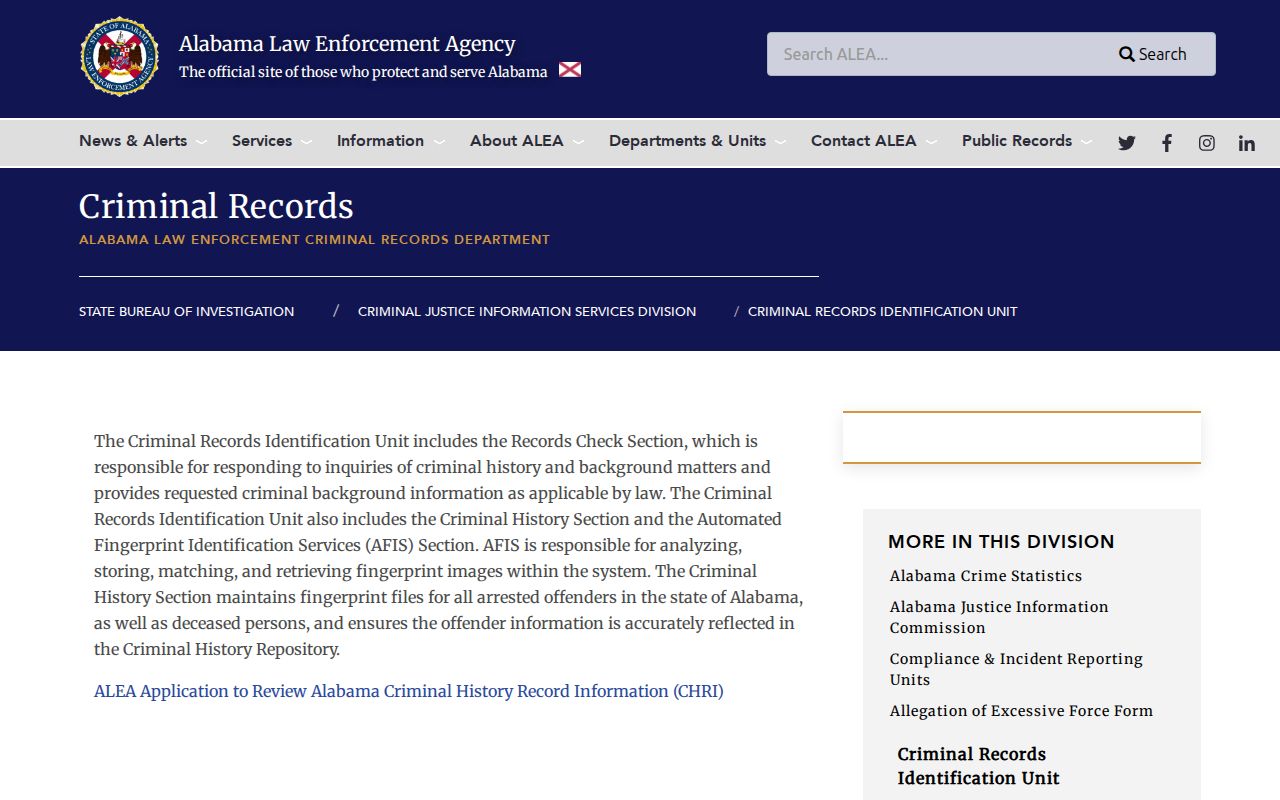
The official unit page is the place to confirm current forms. For an error, Appendix A to Form 46 requires the disputed charge, date, arresting agency or court, an explanation, and official supporting records.
Types of Criminal Records in Walker County
Walker County criminal records reflect different stages of the justice process. An incident report states what an agency received or observed. A booking record marks custody. A charging instrument starts or advances a prosecution. The criminal case file tracks motions, hearings, pleas, judgment, sentence, costs, and appeal events. A warrant record concerns court process and service, while ADOC and the Alabama Bureau of Pardons and Paroles maintain later custody or supervision data.
Registry information is another distinct record. Local law enforcement verifies registration data and sends it to ALEA for public community notification. Juvenile, youthful-offender, sealed, and expunged materials follow tighter rules. Each source should be read for what it actually proves.
- Arrest and booking records identify an alleged event and local custody, not guilt.
- Criminal court files show filed counts, docket events, and the disposition.
- ALEA CHRI links reported Alabama events to fingerprint identity.
- Warrants record judicial process, with unserved Walker warrants kept from public access.
- Custody and supervision files belong to the jail, ADOC, or the state parole agency.
Walker County Jail and State Custody
The Walker County Jail opened in 1998 and has 250 beds in a 57,000-square-foot building. Its published breakdown includes a nine-bed booking unit, along with general, maximum-security, female, medical, trustee, and minimum-security housing. The sheriff does not provide a documented searchable live roster. Current custody questions therefore go to the jail by phone or at the counter.
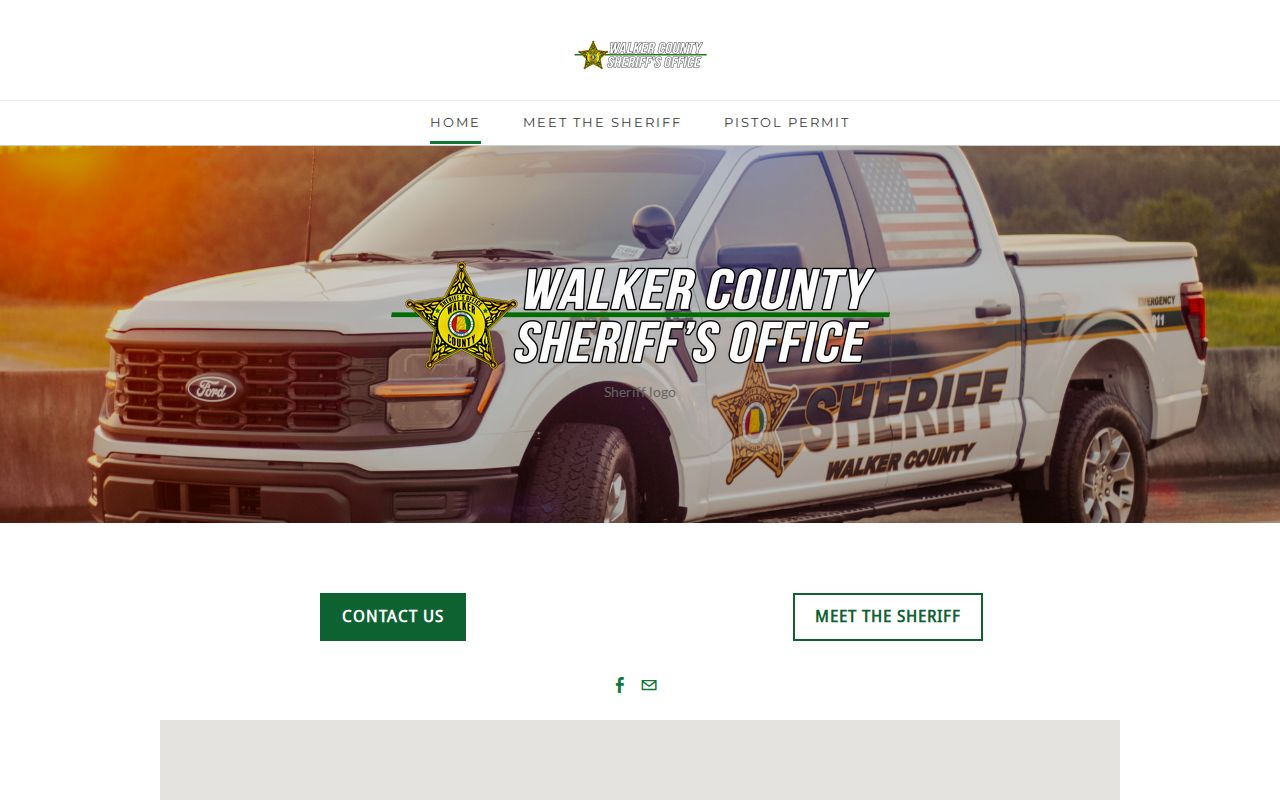
The sheriff's official site is pictured below. It provides agency and service navigation, but its arrest archive and photo paths should not be treated as a full Walker County criminal history or a real-time roster.
After transfer to state prison, use ADOC Inmate Search. It covers current ADOC prisoners, not people still in Walker County Jail, historical custody, or Youthful Offender Act inmates. The state search accepts AIS number, first name, and last name.
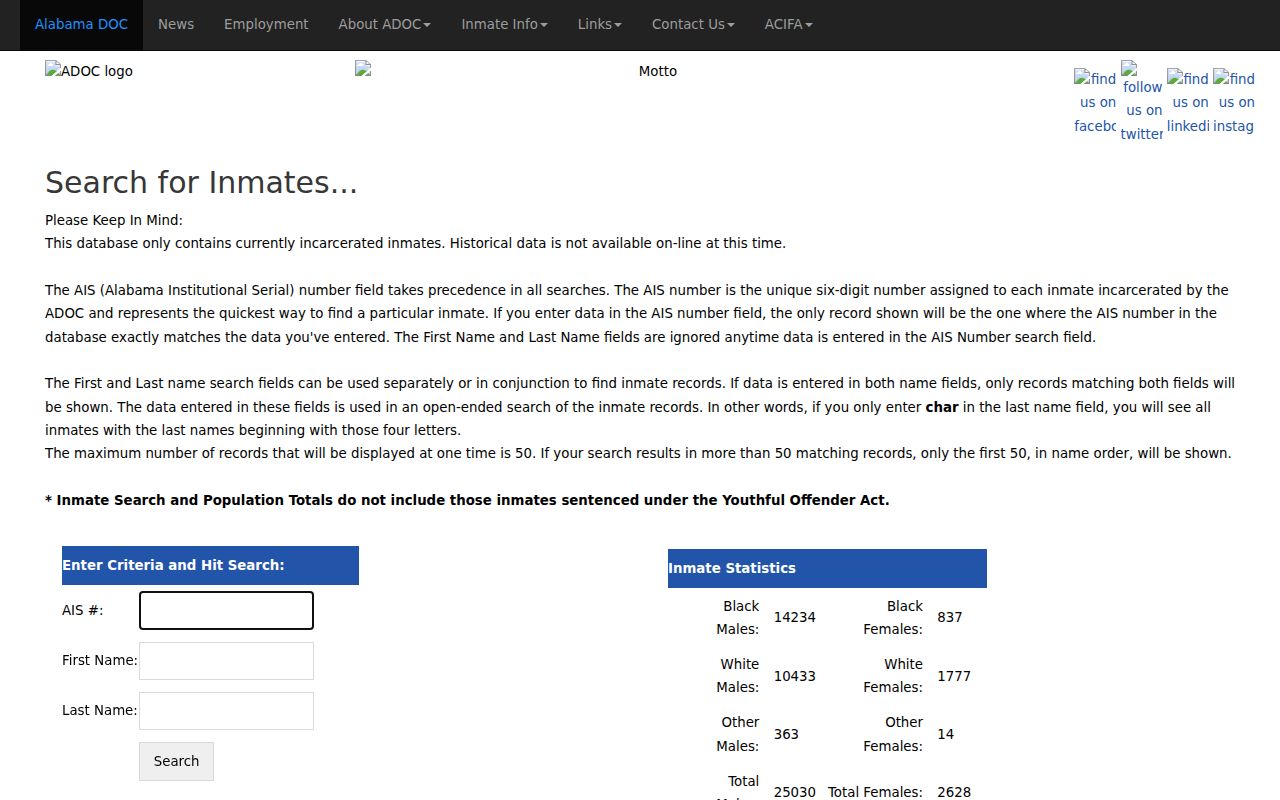
The ADOC screen marks the point where a local custody search changes to a state search. Probation and parole are state-run through the Alabama Bureau of Pardons and Paroles, whose Jasper field office serves Walker County.
Walker County Probation and Parole Records
Probation and parole are not county-run record systems in Alabama. The Alabama Bureau of Pardons and Paroles serves Walker County through its Jasper Field Office and Day Reporting Center Lite at 2209 Delaware Avenue. The office handles supervision, while the Board's hearing and results channels address parole decisions. There is no public statewide name list of everyone on probation.
To trace supervision, begin with the Walker County court judgment. It can show that probation was imposed and may contain later modification, delinquency, or revocation entries. ADOC Inmate Search can display current state custody and fields tied to parole consideration, but it is not a probation search. Current-year parole results show hearing date, AIS number, name, result, and county of conviction. Confidential officer notes, testing, treatment, home visits, and internal response details are not ordinary public lookup fields.
Supervision path: Walker County judgment › Jasper field supervision › Board hearing or violation record › court or custody update.
What a Walker County Criminal Record Shows
The details depend on the source. ALEA criminal-history record information can include identity descriptors, fingerprints, arrests, formal charges, dispositions, sentencing, correctional admission, supervision, and release. A Walker County court file adds the case chronology, filings, parties, judge, costs, restitution, and available images. A jail record is narrower and earlier. Public copies can omit protected identifiers, victim or minor information, and legally restricted material.
| Name & Identifiers | Legal name, aliases, birth data, descriptors, and repository identifiers where authorized. |
|---|---|
| Arrest / Booking Data | Agency, event date, alleged charge, intake, bond, custody, and release fields. |
| Charges & Statutes | Arrest counts can differ from the complaint, indictment, or amended filed counts. |
| Disposition | Conviction, dismissal, acquittal, no-bill, or nolle prosequi recorded for each charge. |
| Sentence | Confinement, fine, restitution, court costs, probation, and other terms in the judgment. |
| Custody / Supervision Status | Reported jail, ADOC, probation, parole, release, or revocation information. |
Walker County Warrant Records Stay Split
Walker County has no public active-warrant name search. The official local magistrate notice says an arrest warrant is not public until served. A person who suspects an active warrant is directed to appear at the Walker County Sheriff's Office at 2001 2nd Avenue in Jasper. Calling ahead and consulting counsel may help plan a safe response, but the stated local route is in person.
The Clerical Division handles warrants. Felony complaints and misdemeanors outside municipal limits follow the county magistrate process. City failure-to-appear or misdemeanor warrants may remain with a municipal court. After service, the court case may show the warrant or capias and later clearance. ADOC search and ALEA personal CHRI are not live warrant checks.
Safety point: Do not rely on a third-party warrant list or treat an online no-result as proof that no warrant exists.
Walker County Felony and Misdemeanor Classes
Alabama labels felonies A through D and misdemeanors A through C. Walker Circuit Court tries felony cases. District Court handles misdemeanor prosecutions and early felony stages, while municipal courts can handle qualifying city misdemeanors and ordinance violations. The class shown beside a charge is only a starting point. An amended count, enhancement, negotiated reduction, or offense-specific rule can change the final record.
- Class A felony
- The highest general felony class, with a range of life or 10 to 99 years before offense-specific rules.
- Class B felony
- A general range of 2 to 20 years, subject to enhancements and the exact offense.
- Class C felony
- A general range of 1 year and 1 day to 10 years under Alabama sentencing provisions.
- Class D felony
- A general range of 1 year and 1 day to 5 years, also subject to statutory sentencing rules.
General misdemeanor jail limits are up to one year for Class A, six months for Class B, and three months for Class C. A case search should be checked against the filed statute and final disposition. Classification also affects expungement, but a C or D label by itself does not prove a conviction is eligible.
Public Access Laws for Walker County Criminal Records
Alabama access depends on the custodian. The Alabama Open Records Act covers public writings, court clerks provide public case records subject to judicial limits, and ALEA criminal-history data follows a more restricted state framework. A focused request should identify the agency, event, date range, and document type. Active investigation material, protected identifiers, juvenile data, victim-sensitive details, and sealed records may be withheld or redacted.
Key Statutes:
Ala. Code §36-12-40 gives Alabama citizens access to public writings, subject to lawful exceptions and reasonable custodian rules.
Ala. Code §41-9-590 defines criminal-history record information to include biometric identity, charges, outcomes, custody, and supervision.
Ala. Code §41-9-601 penalizes false-pretense access and unauthorized communication of protected offender information.
Ala. Code §41-9-645 lets the record subject inspect and challenge inaccurate or incomplete criminal-history information.
Correcting Walker County Criminal History
If an ALEA review is missing a Walker County disposition, first obtain the final court record. The Circuit Clerk keeps Circuit Criminal and District Criminal files and can explain copy and certification options. Match the case number, charge, arresting agency, and event date to the ALEA cycle before submitting a challenge. An agency correction begins with the agency that created the inaccurate fact.
Form 46 Appendix A asks for each disputed charge or date, the related arresting agency or court, the claimed error, the requested correction, and official support. ALEA directs users to return a challenge within one year of the reviewed record or begin a new request. The self-review instructions are shown in the research image below.
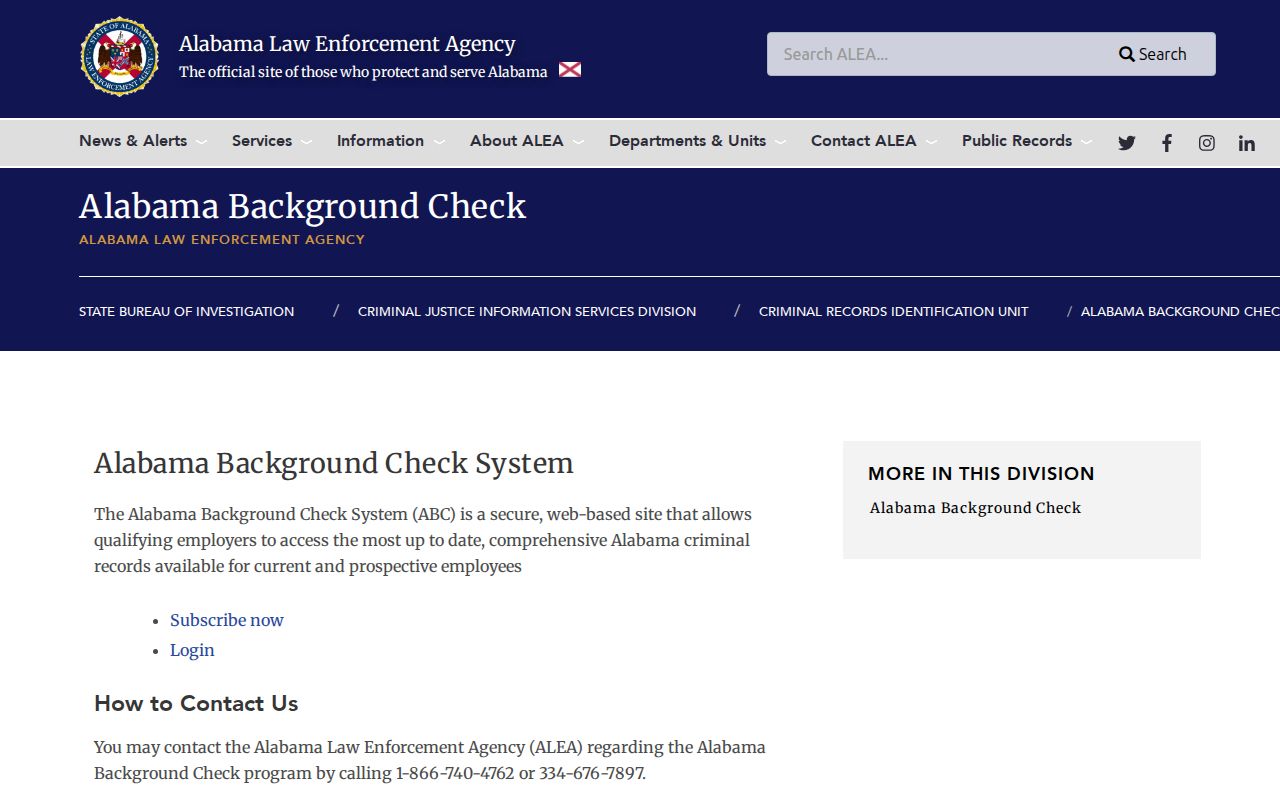
Keep copies of the reviewed history, certified disposition, challenge, and delivery proof. ALEA may need to verify the item with Walker County, so the normal self-review timing does not govern the challenge.
Restricted and Expunged Walker Records
Juvenile and youthful-offender records are not ordinary public adult case files. Courts and agencies also protect Social Security numbers, account details, victim and minor identifiers, sealed material, and sensitive investigative facts. Alabama expungement under Title 15, Chapter 27 removes a qualifying record from ordinary public access, but the statute preserves limited access for criminal-justice and other authorized purposes.
A Walker County petition belongs in the criminal division of Circuit Court when the charge was filed in Walker County. Eligibility changed in 2025 and depends on the outcome, offense, waiting period, and other statutory conditions. A dismissal alone does not erase each agency's record. Confirm the current statute and forms instead of assuming that an old booking entry qualifies.
Walker County Expungement Record Checklist
Alabama expungement starts with certified source records. Obtain the case number and certified disposition from the Walker County Circuit Clerk, then request the certified ALEA history required by statute. The official ALEA Expungement Kit describes the packet, while the Alabama court form library provides current statewide court forms.
- Confirm the exact Walker County case and final disposition.
- Order the certified ALEA criminal history and certified arrest or court material.
- Select the statutory ground that matches the charge and outcome.
- File the petition, attachments, and current fee or approved indigency request.
- Complete notice and any hearing, then verify processing with the court and ALEA.
Violent offenses, sex offenses, and crimes of moral turpitude are key conviction exclusions. A Class C or D label alone does not establish eligibility. The Circuit Clerk can confirm filing mechanics, but legal eligibility depends on the current law and facts.
Criminal Records by City in Walker County
City records have their own front doors. Jasper, Dora, and Sumiton police keep the reports their officers create, while their municipal courts handle qualifying city traffic, ordinance, and misdemeanor matters. A city arrest can also create a Walker County jail record and later a District or Circuit Court case. Start at the city when the event occurred inside its jurisdiction, then follow the record to the county or state level only when the facts require it.
Jasper Criminal History
14,561 · Police Records and Municipal Court use separate city channels.
Dora Criminal History
2,668 · Police and Municipal Court inquiries begin by phone or counter.
Sumiton Criminal History
2,459 · City Hall routes police and municipal record questions.
Walker County Criminal Records in Context
Walker County was created in 1823, covers about 791 land square miles, and had 65,342 residents in the 2020 Census. Its spread of incorporated cities and former coal communities helps explain why the first record may sit with a city police department, the sheriff, ALEA, or another task force before a case reaches the courthouse in Jasper.
The Alabama crime statistics gateway is the current official starting point for reported offense data. The image below reflects that source. Crime counts describe reports in a stated year, not convictions, current danger, or a complete personal record.
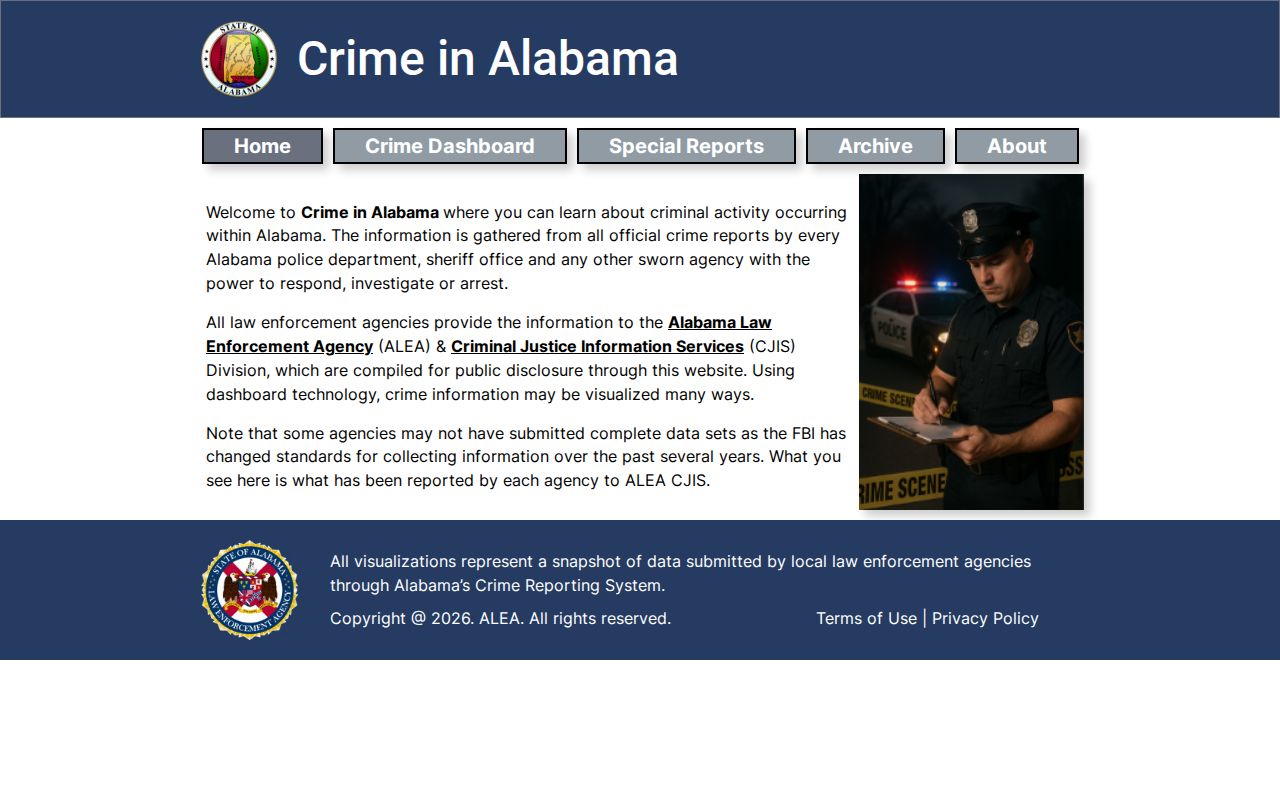
ALEA's dated 2016 table counted 2,427 index crimes countywide. Jasper reported 1,055, Dora 125, and Sumiton 96. Those figures should stay tied to their year and definitions. They do not replace a case search or prove what happened in an individual matter.
The Census QuickFacts also supplies current demographic context for Walker County criminal record research. Its official view appears below.
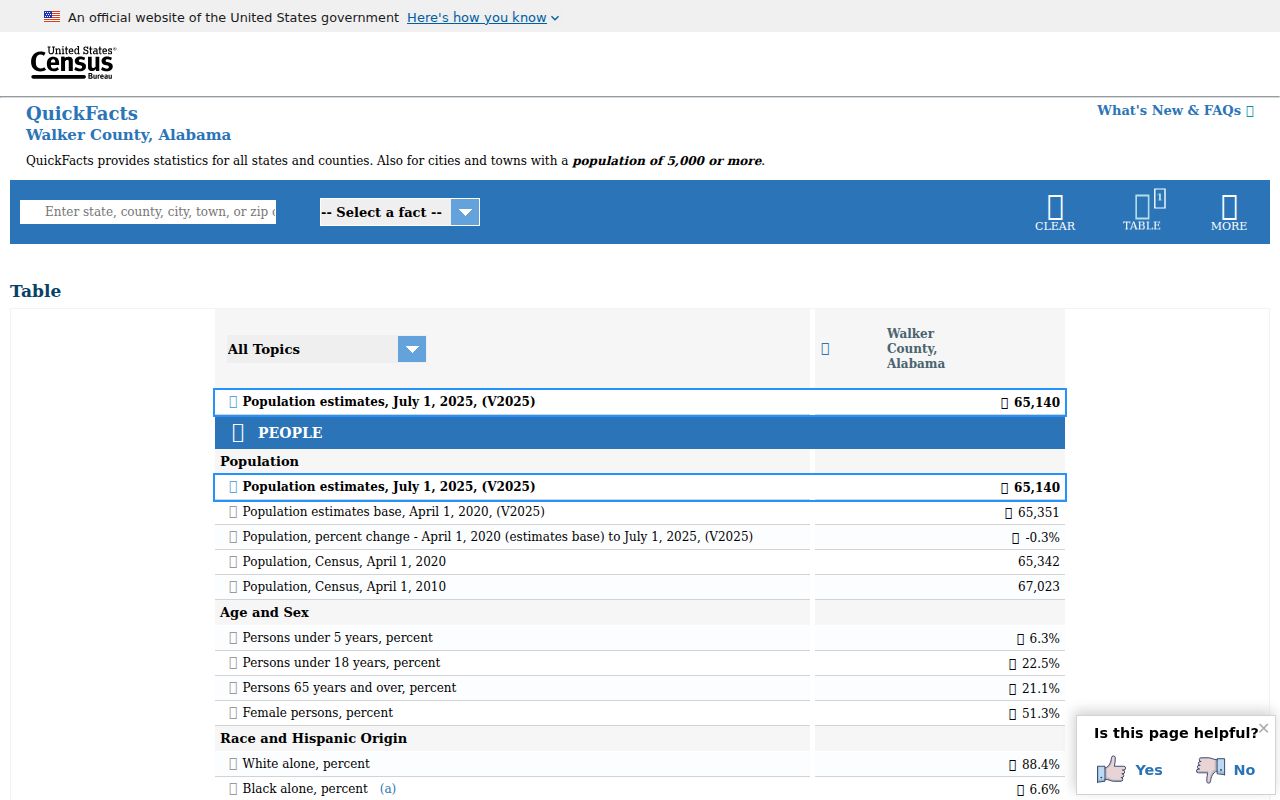
Population estimates and crime-report years should never be mixed into a false current rate. Use the original source, date, and scope whenever numbers help explain the local record system.